
Introduction
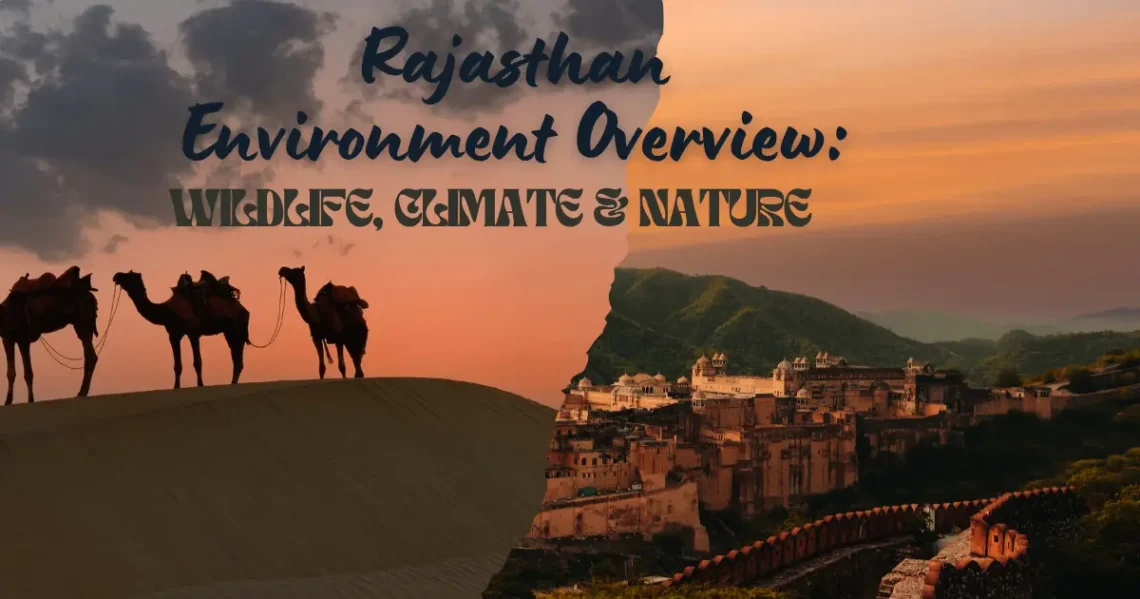
When we think of Rajasthan, most people picture golden deserts, royal palaces, and colorful festivals. But there’s so much more to this majestic state, especially when it comes to it’s environment Rajasthan’s natural world is like a layered storybook—it has deserts, forests, lakes, hills, and a variety of wildlife. It’s not just about the heat and sand; it’s about survival, balance, and beauty found in unexpected places.
The Rajasthan environment plays a vital role in the life of its people. From the way homes are built to how people dress or even what they eat, everything is connected to nature here. And despite the challenges—like droughts, climate change, and increasing tourism—the state has managed to protect many of its natural treasures.
In this overview, let’s walk together through Rajasthan’s environmental landscape. We’ll talk about the climate, the breathtaking wildlife, the unique plants, and how locals and governments are trying to keep this fragile ecosystem alive. Sometimes, we forget how important these things are until they’re threatened, right? That’s why learning about Rajasthan’s environment is so important. It’s not just about nature; it’s about history, culture, and the future of this region.
Ready to dive in? Let’s start with something that affects every single person and creature in Rajasthan—the climate.
Rajasthan’s Climate: An Overview
The climate of Rajasthan is often described as harsh, but there’s a certain beauty in it too. It’s mostly dry, with long summers and short winters. But that’s not the whole story. Different parts of Rajasthan experience different weather patterns, depending on where they are located. For example, places like Jaisalmer are almost always dry and hot, while Mount Abu feels much cooler because it’s in the hills.
Summers in Rajasthan can be extremely hot. Temperatures often rise above 45°C (113°F), especially in May and June. Winters, on the other hand, are much more pleasant, sometimes even chilly in the mornings. But rainfall is limited, and most of it comes during the monsoon season between July and September. This little window of rain becomes the lifeline for farmers and animals alike.
The climate affects daily life in Rajasthan in many ways. People design their homes with thick walls and small windows to keep cool. Traditional clothes, like turbans and long skirts, help protect from the sun while staying breathable. Water is treated like gold because it’s so scarce.
Understanding Rajasthan’s climate helps us appreciate how people and animals have adapted here. It’s a story of resilience, creativity, and learning to live in harmony with the elements—even when they’re unforgiving.
Hot and Arid Conditions
If you’ve ever visited Rajasthan during the peak of summer, you’ll know what “scorching” really means. The state is one of the hottest regions in India, especially in the desert zones. Temperatures can soar beyond 45°C (113°F) during May and June. Sometimes it feels like the heat wraps around you like a thick blanket, leaving barely any space to breathe.
But the people of Rajasthan have found ways to cope with this intense weather over centuries. They wear light-colored clothes to reflect sunlight and drink cool buttermilk to stay hydrated. The architecture here also speaks volumes about survival—thick stone walls, courtyards, and water storage systems are all part of staying cool in the desert heat.
Of course, this kind of climate has its downsides. It leads to water shortages, makes farming difficult, and increases the risk of droughts. Farmers often rely on monsoon rains, but when the rains don’t come, life becomes incredibly hard. Cattle suffer, crops fail, and families have to find ways to manage with less.
Yet, there’s something fascinating about how life continues despite all this. Plants like cacti and trees like the Khejri manage to survive with almost no water. Animals rest during the day and come out at night when it’s cooler. Nature has its own ways of adapting.
So, while Rajasthan’s hot and arid conditions can seem punishing, they’re also part of the state’s unique environmental story.
Rainfall Patterns
Rainfall in Rajasthan is like that distant relative who only visits once a year—and sometimes forgets to show up. Most of the state receives rainfall only during the monsoon season, usually between July and September. Even then, the amount of rain varies greatly from one region to another.
Western Rajasthan, especially places like Jaisalmer and Barmer, hardly get 100 mm of rainfall in a whole year. That’s less than what some places get in a single rainstorm! On the other hand, parts of eastern Rajasthan, like Kota and Udaipur, receive up to 1000 mm annually. It’s a huge difference, right?
The monsoon rains are a lifeline for farmers, especially those who depend on seasonal crops. But when the rains are late or not strong enough, it can cause big problems. Water scarcity becomes severe, and the already dry land gets even drier. Sadly, this is happening more often now because of climate change.
Still, the people of Rajasthan have developed clever water-saving traditions over centuries. Stepwells, tanks, and small dams called “Johads” have been used to collect and store rainwater. These ancient systems are engineering marvels, and some of them still work today.
Rain in Rajasthan isn’t just about water—it’s about hope, survival, and celebration. When the first drops of monsoon fall, it feels like the whole land breathes a sigh of relief.
Seasonal Variations
Rajasthan’s seasons are like different characters in a story, each bringing its own mood and challenges. There are mainly three seasons: summer, monsoon, and winter.
Summer is the most intense. From March to June, temperatures climb higher and higher, sometimes touching 48°C in places like Phalodi. It’s hard to imagine life in such heat, but somehow, people manage. Markets start early in the morning and close before noon. Animals rest in the shade, and streets become almost empty in the afternoons.
Then comes the monsoon season, usually from July to September. This is when the parched earth gets its much-needed drink. But not every year is the same. Some years bring good rains, while others leave the land dry and cracked. It’s a time of both relief and worry.
Finally, winter arrives from October to February. This is the most comfortable season for both locals and tourists. Temperatures drop to as low as 5°C in places like Mount Abu. In fact, Rajasthan’s winter mornings can be surprisingly cold, especially in the desert where the sand cools down quickly at night.
These seasonal changes shape life in Rajasthan. They decide when crops are planted, when festivals are celebrated, and how people plan their daily routines. Understanding these variations helps us see how closely human life is tied to nature her
Natural Landscapes of Rajasthan
Rajasthan is often called the “Land of Kings,” but it could just as easily be called the “Land of Diverse Landscapes.” Most people think it’s only sand dunes and camels, but the truth is, Rajasthan is full of geographical surprises. From deserts and rocky hills to lakes and green valleys, the variety of landscapes is remarkable.
One of the most famous natural features is, of course, the Thar Desert. It stretches across much of western Rajasthan, painting the land with golden sands. But just when you think it’s all dry and barren, you discover the Aravalli Hills. These ancient mountains cut across the state and are home to forests, rivers, and wildlife that you wouldn’t expect to find in such a dry region.
Then there are Rajasthan’s lakes—some natural, some man-made—that add beauty and life to the state. Udaipur, for example, is known as the “City of Lakes” because of its stunning water bodies like Lake Pichola and Fateh Sagar Lake. Even in the desert, saltwater lakes like Sambhar Lake play a crucial role in the environment.
Wetlands, grasslands, and even small forests make up the rest of Rajasthan’s natural beauty. These different landscapes aren’t just pretty to look at—they support a variety of plants, animals, and ways of life. The environment here has taught people how to adapt, how to survive, and how to find beauty in even the harshest conditions.
Let’s break down these landscapes a little more, starting with the most famous one: the Thar Desert.
The Thar Desert
The Thar Desert is one of the most iconic parts of Rajasthan. Spreading across western Rajasthan, it’s also known as the “Great Indian Desert.” At first glance, it might look like just sand and sky, but if you take a closer look, you’ll see that it’s teeming with life.
The Thar is the most densely populated desert in the world. Strange, right? How can so many people live in a desert? Well, the locals have learned to live with nature’s rules. They build homes from mud and stone, grow crops that need little water, and keep animals like camels and goats that can survive in harsh conditions.
The desert isn’t empty. It has a unique ecosystem filled with special plants and animals. You’ll find shrubs like Sevan grass and trees like Khejri that can survive with hardly any water. Animals like the Desert Fox, Blackbuck, and Indian Gazelle (Chinkara) call the Thar home. There are even snakes and lizards that have adapted to live in the hot sand.
But the Thar Desert faces many challenges. Overgrazing, deforestation, and climate change are causing the desert to spread further into fertile lands—a process called desertification. This is a big concern for Rajasthan’s environment.
Still, the Thar remains one of the world’s most fascinating deserts. It’s not just a place of survival; it’s a place where life and culture have bloomed against all odds.
Aravalli Hills
The Aravalli Hills are like Rajasthan’s green lungs. These hills, some of the oldest in the world, run diagonally from the southwest to the northeast of the state. They might not be as tall as the Himalayas, but they play a huge role in Rajasthan’s environment.
For starters, the Aravalli Hills act as a natural barrier. They block the desert winds from reaching eastern Rajasthan, helping to maintain greener landscapes in cities like Udaipur and Mount Abu. These hills are also home to many rivers and streams, including the Banas River and the Chambal River, which are lifelines for the people living nearby.
The forests in the Aravalli Hills provide shelter to lots of wildlife. Leopards, hyenas, and jackals roam these parts, while birds like peacocks and partridges are commonly seen. In fact, parts of the Aravallis have been turned into wildlife sanctuaries to protect these animals.
Unfortunately, the Aravalli Hills are under threat. Mining, deforestation, and illegal construction have damaged large portions of this ecosystem. When the hills are cut down for stone or minerals, the land becomes more prone to erosion, and water levels drop.
Despite these problems, the Aravalli Hills remain one of Rajasthan’s most important natural features. They’re not just scenic backdrops—they’re protectors of biodiversity and key to maintaining the state’s environmental balance.
Lakes and Wetlands
When you think of Rajasthan, lakes might not be the first thing that comes to mind. But they’re an important part of the state’s natural beauty and ecology. In fact, some of Rajasthan’s lakes are famous worldwide for their beauty and history.
Udaipur, known as the “City of Lakes,” is home to Lake Pichola, Fateh Sagar Lake, and several others. These lakes are man-made, built centuries ago to store water for the city’s residents and rulers. They’re not just beautiful—they’re life-saving reservoirs in a place where water is often scarce.
There are also natural lakes and wetlands in Rajasthan, like Sambhar Lake, which is India’s largest inland saltwater lake. This lake isn’t just about salt production; it’s a hotspot for migratory birds, especially flamingos that come here every winter. Other important wetlands include Keoladeo National Park, a UNESCO World Heritage Site that’s home to hundreds of bird species.
These water bodies help balance Rajasthan’s dry climate by supporting plant life, recharging groundwater, and providing habitats for fish and birds. They also attract tourists, photographers, and nature lovers from around the world.
But, sadly, pollution and shrinking water levels are threatening these lakes and wetlands. Over-extraction of groundwater and dumping of waste are slowly damaging these delicate ecosystems.
Even so, Rajasthan’s lakes remain jewels in the desert, offering not just beauty but essential support to life in the state.
Wildlife in Rajasthan
Rajasthan’s wildlife is as colorful and dramatic as its culture. From tigers prowling in dense forests to graceful deer leaping across grasslands, the state is home to an amazing variety of animals and birds. This diversity might surprise you, especially since much of Rajasthan is desert. But nature always finds a way to adapt.
The state has several national parks and wildlife sanctuaries that protect its unique species. These protected areas are home to tigers, leopards, hyenas, wild boars, and countless bird species. In fact, birdwatchers from all over the world flock to Rajasthan every year to see rare and migratory birds.
One of the most famous residents of Rajasthan’s wildlife scene is the Bengal Tiger, found in Ranthambore and Sariska reserves. Then there’s the Great Indian Bustard, a critically endangered bird that’s now very rare but still survives in some parts of Rajasthan.
Wildlife here is not just limited to forests and sanctuaries. Even in villages and near cities, you’ll often spot peacocks dancing, monkeys playing, and camels strolling down the streets. It’s part of everyday life.
Protecting wildlife in Rajasthan is challenging. Habitat loss, poaching, and climate change are constant threats. However, there are ongoing efforts to preserve these animals through conservation programs and eco-tourism.
Let’s now take a closer look at some of the major wildlife reserves and the special creatures that call Rajasthan home.
National Parks and Wildlife Sanctuaries
Rajasthan is a haven for wildlife lovers, thanks to its rich collection of national parks and sanctuaries. Each reserve has its own charm and offers a different glimpse into the state’s natural world. These parks aren’t just tourist attractions—they’re crucial for conserving endangered animals and preserving the delicate balance of nature.
One of the most famous is Ranthambore National Park, located near Sawai Madhopur. Ranthambore is known for its tigers, and spotting one here is often the highlight of any wildlife tour. But it’s not just tigers—leopards, wild boars, marsh crocodiles, and a variety of birds live in this forest too. The ancient Ranthambore Fort inside the park adds a historic touch to the experience.
Next comes the Sariska Tiger Reserve in the Alwar district. Sariska also has tigers, but it’s equally known for its leopards, striped hyenas, and nilgai (blue bulls). This reserve has faced challenges in the past, especially with tiger populations disappearing, but conservation efforts have helped bring the big cats back.
Then there’s the Keoladeo National Park in Bharatpur, a UNESCO World Heritage Site. Unlike the other parks, Keoladeo is a bird sanctuary. It attracts thousands of migratory birds from all over the world, including Siberian cranes, pelicans, and ducks. During the winter, the park turns into a paradise for bird watchers.
Other wildlife hotspots include Desert National Park, Kumbhalgarh Wildlife Sanctuary, and Mount Abu Sanctuary. Each of these places protects a slice of Rajasthan’s biodiversity.
Visiting these parks teaches us not just about animals but about the importance of respecting nature. They remind us that the wild is something to be cherished, not conquered.
Endangered and Native Species
Rajasthan is home to some truly special creatures, but sadly, many of them are endangered. That means their numbers are getting dangerously low, and without help, they could disappear forever. It’s a worrying thought, isn’t it?
One of the most critically endangered animals here is the Great Indian Bustard. This large bird once roamed freely across Rajasthan’s grasslands, but now only a few are left. It’s heartbreaking because the Great Indian Bustard is not just any bird—it’s a symbol of Rajasthan’s natural heritage. Poaching, habitat loss, and power lines have pushed it to the edge of extinction.
Another famous resident is the Bengal Tiger. Tigers in Rajasthan mostly live in Ranthambore and Sariska. These majestic animals are still under threat due to poaching and shrinking forests, though conservation efforts have helped their numbers improve a little in recent years.
The Desert Fox, Indian Gazelle (Chinkara), Caracal (a rare wild cat), and Blackbuck are also native to Rajasthan. Each plays a role in keeping the ecosystem balanced.
Birdlife is another treasure here. The Indian Peafowl, which is India’s national bird, is commonly seen in villages and forests. Rajasthan’s wetlands attract thousands of migratory birds, like flamingos and cranes, who travel thousands of miles to rest and feed here.
Saving these animals isn’t just about the animals themselves. It’s about protecting the entire web of life, including plants, insects, and even humans who share the same space. Every creature has its role, and when one disappears, it affects everything else. That’s why wildlife conservation is so important.
Flora of Rajasthan
Rajasthan’s plant life might not be as famous as its wildlife, but it’s just as fascinating. Imagine living in a place where water is scarce and temperatures can reach extremes—plants here have learned to survive in these tough conditions, and their adaptations are nothing short of amazing.
In the desert regions, you’ll find thorny bushes, grasses, and shrubs that don’t need much water. Plants like Ber, Babool, and Khejri are common. The Khejri tree, in particular, is very special. It’s called the “King of the Desert” because it provides food, fodder, and even shade in places where nothing else grows. Villagers use its leaves to feed cattle and its wood for fuel, but cutting it down is often considered bad luck because it’s so vital to survival.
In the hillier areas, like Mount Abu and the Aravalli Hills, the plant life is greener and denser. Here you’ll find neem, mango, bamboo, and even some medicinal plants. These trees and plants help protect the soil from erosion and provide habitats for animals and birds.
Rajasthan also has a tradition of using plants in Ayurveda and folk medicine. Herbs like Ashwagandha and Guggul are found in some areas and are used in healing remedies passed down through generations.
However, like other parts of nature, the flora of Rajasthan is under threat. Deforestation, overgrazing, and climate change are making it harder for native plants to thrive. Protecting these plants isn’t just about saving greenery—it’s about keeping the environment stable and supporting the lives of people and animals who depend on them.
Desert Vegetation
Desert vegetation in Rajasthan is a masterclass in survival. Imagine growing with almost no water, under a blazing sun, and in sandy soil that offers little nourishment. Yet, the plants here have figured out how to make it work.
Most desert plants have small leaves or spines to reduce water loss. Think of cacti, sewan grass, and phog shrubs. These plants store water in their roots or stems and spread their roots far and wide to catch whatever little rain falls.
The Khejri tree is like a superstar in desert vegetation. It’s not just tough—it’s also incredibly useful. Its leaves feed animals, its pods are cooked into meals during famines, and its roots help keep the soil stable. In fact, there’s even a religious respect for this tree among Rajasthan’s rural communities.
Another important desert plant is Babool (Acacia). Its wood is used for fuel, and its gum has medicinal uses. Then there’s the Ber plant, which produces small fruits that people eat.
Despite how rugged desert vegetation looks, it plays a delicate role in the environment. These plants prevent soil erosion, support insect life, and provide food for herbivores. Without them, the desert would become a lifeless stretch of sand.
Unfortunately, modern farming, deforestation, and climate shifts are making it harder for desert vegetation to survive. When these plants disappear, the desert becomes more fragile, leading to even bigger environmental problems.
Medicinal and Traditional Plants
Rajasthan has a rich tradition of using plants for medicine, and many of these healing practices are still alive today. In villages, elders often know which herb or root can help with a cough, fever, or even a snake bite. It’s like a living library of natural remedies passed from generation to generation.
One of the most famous medicinal plants here is Ashwagandha, also called Indian ginseng. It’s known for boosting energy and reducing stress. Farmers in Rajasthan grow Ashwagandha not just for local use but also to sell in herbal markets.
Another important plant is Guggul, which comes from the resin of the Commiphora tree. It’s used in Ayurveda for treating joint pain and cholesterol problems. The resin is collected carefully to avoid damaging the plant.
Then there’s Neem, which is often called “nature’s pharmacy.” Its leaves, bark, and seeds are used for skin problems, fevers, and even as a natural pesticide.
In rural Rajasthan, plants like Tulsi (Holy Basil) and Aloe Vera are commonly grown in home gardens. They’re used for everything from stomach troubles to cuts and burns.
But here’s the problem: with modern medicine becoming more popular, many traditional plant uses are being forgotten. Some medicinal plants are also at risk due to overharvesting and habitat loss.
Preserving these plants and the knowledge around them is important—not just for health, but for keeping cultural traditions alive. Nature has provided solutions for centuries; sometimes, we just need to remember to look back and learn from them.
Conservation Efforts in Rajasthan
Saving Rajasthan’s environment isn’t easy, but the state has made some real efforts to protect its natural treasures. Conservation here isn’t just about saving tigers or planting trees—it’s about preserving an entire way of life that’s deeply connected to nature.
One of the key approaches has been creating national parks, wildlife sanctuaries, and reserves. Places like Ranthambore, Sariska, and Keoladeo are carefully managed to protect animals, plants, and ecosystems. These parks don’t just protect wildlife; they also attract eco-tourism, which helps fund conservation efforts.
The Rajasthan government has also introduced policies to promote water conservation, such as reviving old stepwells and traditional water harvesting systems like Johads. In a state where water scarcity is a constant problem, saving water is as important as saving forests.
Additionally, there are programs aimed at protecting endangered species, like the Great Indian Bustard and Bengal Tiger. Breeding programs, habitat restoration, and wildlife monitoring are part of this effort. Sometimes these programs succeed, sometimes they face setbacks—it’s a learning process.
What’s inspiring is that local communities are getting involved too. Villagers participate in tree planting, guard sacred groves, and help monitor wildlife. In some cases, local traditions naturally protect the environment, like the Bishnoi community, known for its devotion to protecting animals and trees.
But challenges remain. Conservation is not a one-time task—it’s ongoing. Poaching, illegal mining, and climate change continue to threaten Rajasthan’s environment.
Even so, these efforts show that with commitment and cooperation, it’s possible to balance human needs with nature’s survival.
Future Prospects and Sustainable Solutions
Looking ahead, Rajasthan has both challenges and opportunities. The future of the state’s environment will depend on how wisely people act today. Luckily, there are ways to create a balance between development and sustainability.
One of the most promising solutions is renewable energy. Rajasthan is already leading in solar power, and expanding this even more can reduce pollution and save natural resources. Wind energy is also growing, especially in areas like Jaisalmer.
Water conservation will be crucial. Using traditional systems like Johads and baoris, along with modern technology, can help store rainwater and recharge groundwater. Some villages are already doing this successfully.
Eco-tourism can be expanded, giving people a chance to experience Rajasthan’s natural beauty while also generating income for local communities. But this has to be done carefully so that tourism doesn’t harm the environment it’s meant to protect.
Education and awareness are key. Teaching children and adults about the importance of conservation, recycling, and respecting wildlife can create long-term change.
Finally, protecting local traditions—like community forests and herbal medicine—can help keep the environment and culture alive together.
It won’t be easy. There will be mistakes, disagreements, and setbacks. But if everyone works together, Rajasthan can move toward a future where nature and people thrive side by side.
Conclusion
Rajasthan’s environment is a story of extremes—scorching deserts, green hills, dry rivers, and lush lakes. It’s also a story of survival, beauty, and delicate balance. The people, plants, and animals here have learned to live in harmony with nature for centuries, but today, that balance is under threat.
The good news? There’s still time to make things better. Conservation programs, renewable energy, and community efforts are all steps in the right direction. But it’s not just about government policies—it’s about everyone doing their part, whether that’s saving water, protecting wildlife, or simply respecting the land.
Understanding Rajasthan’s environment is the first step toward protecting it. And maybe, just maybe, if we listen to the lessons nature teaches us, we can create a future where Rajasthan’s wild beauty survives for generations to come.
FAQs
1. What is the main climate of Rajasthan?
Rajasthan mostly has a hot and dry climate. Summers are extremely hot, winters are cool, and rainfall is limited to the monsoon season.
2. Which animals are found in Rajasthan’s wildlife reserves?
Animals like Bengal tigers, leopards, hyenas, blackbucks, desert foxes, and migratory birds are commonly found in reserves like Ranthambore, Sariska, and Keoladeo.
3. Why is the Thar Desert important to Rajasthan’s environment?
The Thar Desert shapes Rajasthan’s culture and ecosystem. It supports unique wildlife, special plants, and traditional ways of life adapted to desert conditions.
4. What are the major environmental problems in Rajasthan?
Key issues include water scarcity, desertification, pollution, habitat loss, and the impact of climate change on agriculture and wildlife.
5. How is Rajasthan promoting eco-tourism?
Rajasthan encourages eco-tourism through wildlife safaris, bird watching tours, and village stays that promote conservation and involve local communities.