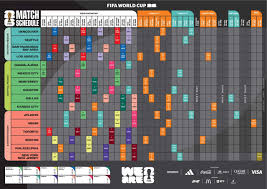

The FIFA World Cup is widely regarded as the most prestigious and exciting football tournament in the world. Organized by the Fédération Internationale de Football Association (FIFA), it brings together national teams from across the globe to compete for the ultimate prize in international football. Since its inception in 1930, the World Cup has grown into a global sporting event that captures the attention of billions of fans every four years.
The tournament is not just about football; it is about passion, culture, unity, and national pride. Countries prepare for years, players dream of representing their nations, and fans eagerly wait for moments of magic, drama, and history-making performances. The World Cup is more than a competition—it is a celebration of the world’s most popular sport.
History of the FIFA World Cup
The first FIFA World Cup was held in 1930 in Uruguay. Only 13 teams participated in that edition, and Uruguay became the first-ever champion. Since then, the tournament has expanded significantly in size, format, and global reach.
Over the decades, many legendary teams and players have shaped World Cup history. Countries like Brazil, Germany, Italy, Argentina, and France have dominated different eras. Brazil holds the record for the most titles, showcasing some of the greatest football legends such as Pelé, Ronaldo, and Ronaldinho.
The tournament was not held in 1942 and 1946 due to World War II, but it resumed in 1950 and has continued uninterrupted ever since.
Today, the World Cup features 32 teams (and will expand to 48 teams in future editions), making it one of the most competitive sports events in the world.
Format of the World Cup
The FIFA World Cup follows a structured format that includes qualification rounds and the final tournament.
1. Qualification Stage
Before the main tournament, teams from different continents compete in qualification matches. FIFA divides the world into six football confederations:
- UEFA (Europe)
- CONMEBOL (South America)
- CONCACAF (North, Central America & Caribbean)
- CAF (Africa)
- AFC (Asia)
- OFC (Oceania)
Each region has its own qualification system to determine which teams will reach the World Cup.
2. Group Stage
In the final tournament, teams are divided into groups. Each group consists of four teams that play against each other. The top two teams from each group advance to the knockout stage.
3. Knockout Stage
The knockout stage includes:
- Round of 16
- Quarter-finals
- Semi-finals
- Final
If a match ends in a draw, extra time and penalty shootouts are used to determine the winner.
Importance of the World Cup
The World Cup is more than just a sports competition. It has cultural, economic, and social importance.
1. Global Unity
The tournament brings together people from different cultures, languages, and backgrounds. It promotes unity through sport.
2. Economic Impact
Host countries benefit from tourism, infrastructure development, and global exposure. Billions of dollars are generated through sponsorships, broadcasting rights, and merchandise.
3. Inspiration for Youth
Young footballers around the world are inspired by World Cup heroes. Many dream of becoming professional players after watching the tournament.
4. National Pride
Winning or even participating in the World Cup is a matter of pride for countries. It boosts national morale and identity.
Famous World Cup Moments
The World Cup has produced countless unforgettable moments that are etched in football history.
- 1958: A young Pelé shines for Brazil and becomes a global superstar.
- 1966: England wins its first and only World Cup on home soil.
- 1986: Diego Maradona’s “Hand of God” and “Goal of the Century.”
- 1998: France wins its first World Cup led by Zinedine Zidane.
- 2010: Spain dominates world football with tiki-taka style.
- 2022: Argentina wins the trophy with Lionel Messi finally lifting the cup.
These moments show how the World Cup creates legends and unforgettable memories.
World Cup and Technology
Modern World Cups have embraced technology to improve fairness and excitement in football.
- VAR (Video Assistant Referee): Helps referees make correct decisions.
- Goal-line Technology: Confirms whether the ball has crossed the goal line.
- Advanced Analytics: Teams use data to analyze performance and strategies.
Technology has made the game more accurate and transparent.
Challenges of the World Cup
Despite its success, the World Cup also faces challenges:
1. Hosting Costs
Organizing the tournament requires massive investment in stadiums and infrastructure.
2. Political Issues
Sometimes political tensions between countries affect participation or hosting decisions.
3. Player Fatigue
Top players often have busy schedules, and the World Cup adds additional pressure.
4. Climate Concerns
Recent tournaments have raised concerns about environmental impact and sustainability.
Future of the World Cup
The future of the World Cup looks exciting. FIFA plans to expand the tournament to 48 teams, allowing more countries to participate. This will increase competition and global representation.
There are also discussions about improving scheduling, player welfare, and environmental sustainability. The World Cup is expected to continue evolving with modern football trends and technologies.
Frequently Asked Questions (FAQs)
1. What is the FIFA World Cup?
The FIFA World Cup is an international football tournament where national teams compete to become world champions.
2. How often is the World Cup held?
It is held every four years.
3. Which country has won the most World Cups?
Brazil has won the most titles in World Cup history.
4. How many teams participate in the World Cup?
Currently, 32 teams participate, but it will expand to 48 teams in future editions.
5. Who organizes the World Cup?
The tournament is organized by FIFA (Fédération Internationale de Football Association).
6. What is the most famous World Cup moment?
Moments like Maradona’s 1986 performance and Messi’s 2022 victory are among the most famous.
7. Why is the World Cup important?
It promotes global unity, inspires athletes, and has a huge economic and cultural impact.
Conclusion
The FIFA World Cup is not just a football tournament—it is a global phenomenon that unites billions of people. From its humble beginnings in 1930 to becoming the most-watched sporting event in the world, the World Cup has grown into a symbol of passion, excellence, and international unity.
Every four years, the world comes together to witness unforgettable goals, emotional victories, and heartbreaking defeats. It inspires young players, entertains fans, and creates history that lasts forever.